Having both knees replaced at once is a reasonable choice for a healthy patient with a strong heart and lungs who understands that the recovery is harder. For most other patients, two separate operations a few months apart is the safer path. Large studies agree that doing both knees in one operation raises the risk of blood transfusion, blood clots and, rarely, death in the first months, while it lowers the risk of infection and repeat surgery. A database study published in the Journal of Arthroplasty this August added a new detail: in patients with obesity, the extra risk of doing both knees together was larger, and it grew with body weight.1
This article explains what each approach involves, what the numbers show, how long to wait between knees if you stage them, and how I decide with patients which path fits.
Why this matters to you
Arthritis is often worse in one knee but present in both. Once a patient decides on surgery, the next question is usually whether to “get it all over with.” The appeal is clear: one hospital stay, one anesthetic, one stretch of time off work, and one rehabilitation instead of two. The concern is that two knee replacements in one sitting place roughly twice the physical stress on the body in a single day. Patients hear strong opinions both ways from friends and online forums. The evidence supports a more specific answer than either “always” or “never,” and it depends mostly on your general health.
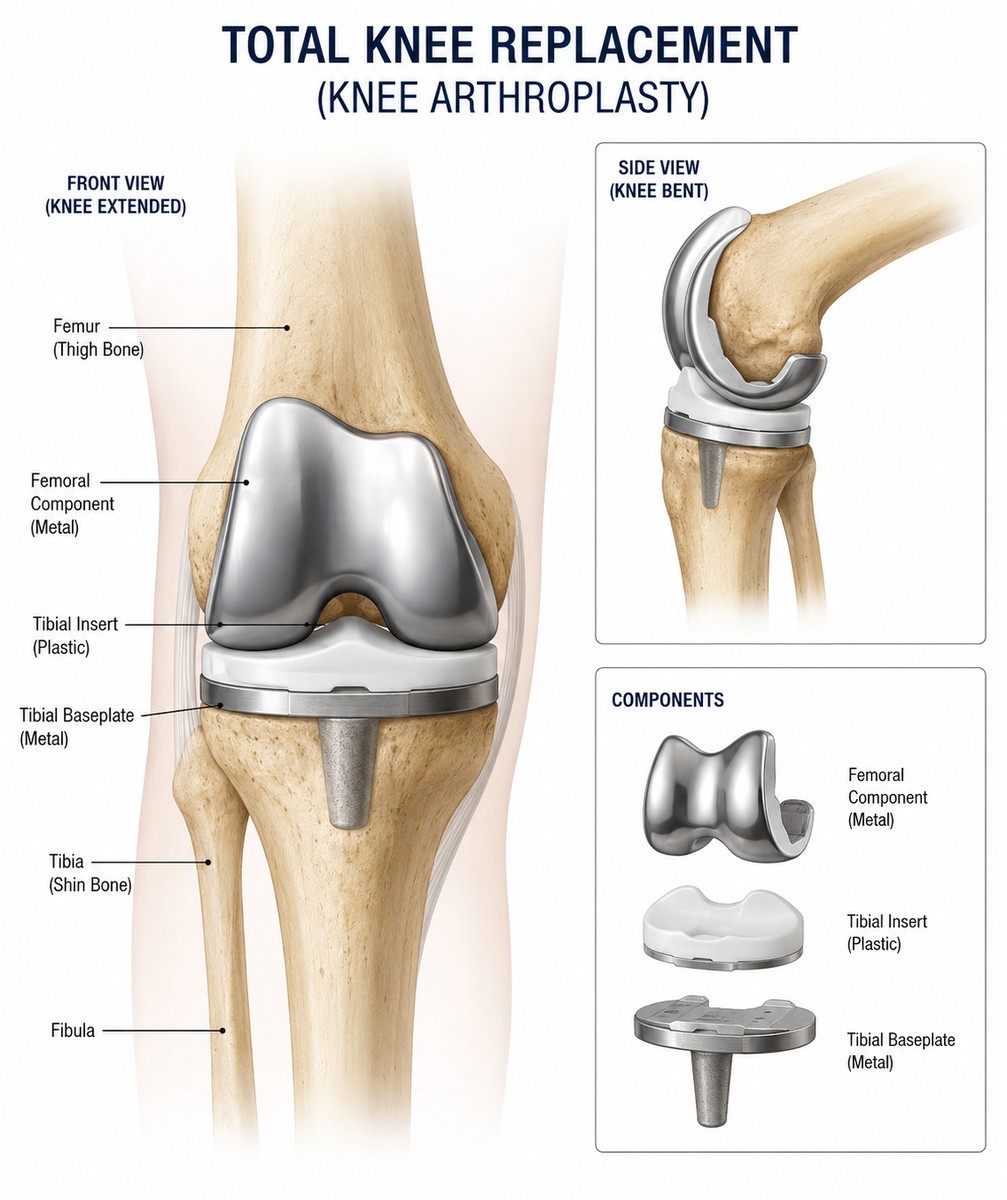
The two approaches
Simultaneous bilateral knee replacement means both knees are replaced during the same anesthetic, usually one right after the other. You wake up with two new knees and go through one recovery.
Staged bilateral knee replacement means the knees are replaced in two separate operations, typically weeks to months apart. You recover from the first knee, then have the second one done.
Both approaches end in the same place: two replaced knees. The differences are in the risks along the way, the total time to recover, and the cost.
What the large studies show
No large randomized trial has compared these two approaches. The evidence comes from national databases, joint registries and pooled analyses of those studies, which are large enough to measure uncommon complications.
The three largest pooled analyses
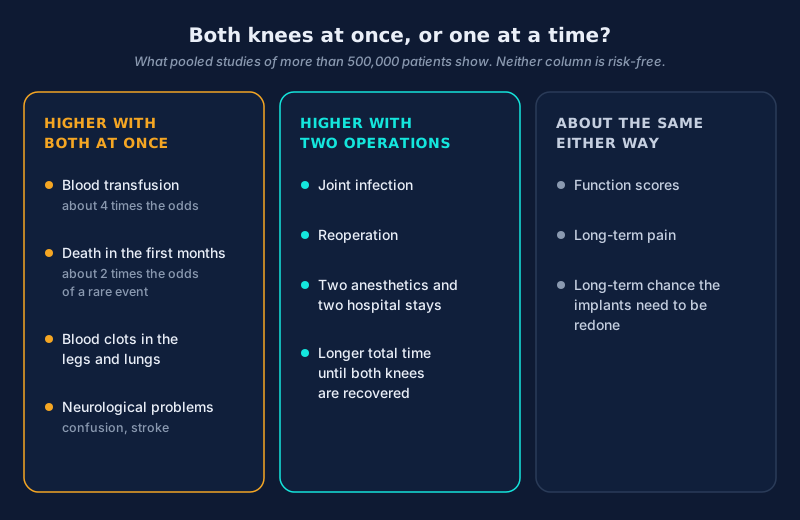
A 2025 meta-analysis combined 42 studies with 567,915 patients, about 225,000 of whom had both knees done at once.2 Compared with staged surgery, doing both knees together carried:
- about 4 times the odds of a blood transfusion
- about 2.4 times the odds of death in the first year
- about 1.5 times the odds of a neurological complication, such as confusion or stroke
It also carried lower odds of joint infection in the hospital, fracture around the implant, and reoperation. In-hospital cost was about $7,000 lower. Function scores and persistent pain did not differ between the groups.
A meta-analysis published this June, covering 53 studies and 572,881 patients, reached a similar picture: higher odds of short-term death (about 2.4 times), leg clots (about 1.5 times) and transfusion (about 4.4 times) with simultaneous surgery, and lower odds of superficial and deep infection.3 An earlier analysis of 29 studies found about 2.2 times the odds of death within 90 days and about 1.7 times the odds of a clot in the lungs (pulmonary embolism) with simultaneous surgery, along with a hospital stay about two days shorter.4
Putting “twice the odds” in perspective
Death after knee replacement is rare, so “twice the odds” describes a small number becoming a slightly less small number. In a US national hospital database, in-hospital death occurred in 0.30% of bilateral knee replacements compared with 0.14% of single knee replacements, or about 3 in 1,000 patients compared with about 1 in 1,000.5 The same study found that age over 75 was one of the strongest predictors of in-hospital death, with about four times the odds. The risk is not spread evenly. It is concentrated in older patients and those with heart, lung or other medical problems, which is why selecting patients carefully matters so much.
Does doing both at once save money?
Simultaneous surgery is cheaper for the hospital stay, but the total picture is less clear. A single-center US study of 562 patients found that people who had both knees done together were more likely to need a stay in an inpatient rehabilitation facility afterward. Once that cost was added, total costs were nearly identical: about $24,600 for simultaneous and $24,900 for staged surgery. The same study found clots in 5.4% of simultaneous patients compared with 1.4% of staged patients, and transfusions in 15.8% compared with 6.2%.6
What this means for you: both approaches give the same long-term result in your knees. The choice is about which set of short-term risks fits your health, and whether you can manage the harder recovery of two new knees at once.
The new study: body weight changes the math
The study published in August used a large international database of 11,965 patients who had both knees replaced between 2014 and 2024.1 The authors grouped patients by body mass index (BMI) and compared simultaneous surgery with staged surgery at two intervals: one to four months, and four to twelve months.
The effect of timing depended on weight:
- From a BMI of 30 upward (the threshold for obesity), staging the surgery was linked to fewer complications in the first 30 days.
- At a BMI of 35 and above, staging was also linked to less implant loosening and fewer revision surgeries over two years.
- The difference was largest above a BMI of 40. In that group, staged patients had about one-fifth the odds of a 30-day complication and about one-eighth the odds of revision compared with simultaneous patients.
- In patients without obesity, the pattern partly reversed: staged patients were more likely to be readmitted within 30 days.
Outcomes were similar whether the second knee was done at one to four months or four to twelve months.
What this means for you: if your BMI is in the obese range, and especially above 35 to 40, this study adds weight to doing the knees separately. If your weight is in the normal or overweight range and you are otherwise healthy, the study does not argue against doing both at once.
If you stage it, how long should you wait?
The studies agree on what to avoid and disagree slightly on the best window.
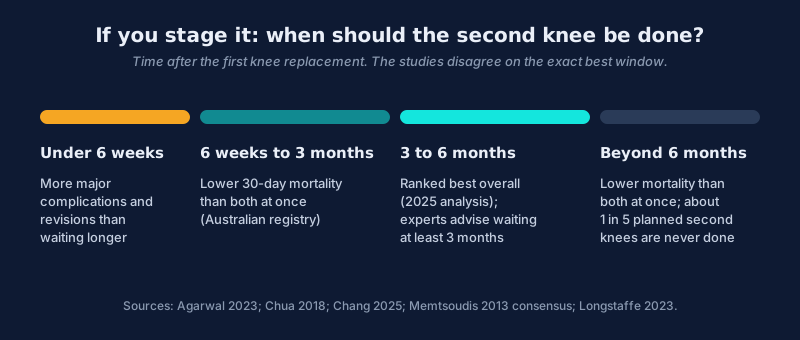
- Avoid less than about six weeks. In a US insurance database of more than 25,000 staged patients, second surgeries done within six weeks of the first had higher odds of major complications and revision than those done later.8
- Six weeks to three months was associated with lower 30-day mortality than simultaneous surgery in the Australian national joint registry, which followed more than 36,000 bilateral knee replacements. Revision rates were similar at every interval.9
- Three to six months ranked best for one-year mortality and 90-day complications in a 2025 network analysis of 15 studies.10 An expert consensus panel in 2013 recommended waiting at least three months.7
- Beyond six months still had lower mortality than simultaneous surgery, though the same network analysis found more lung and infection complications in that group than in the three-to-six-month window.10
Many second knees are never done
Staging has a cost that the complication studies do not capture. A Canadian study followed 268 patients who planned staged surgery. About one in five did not have the second knee replaced within two years.11 The most common reasons were a slow recovery from the first knee (43%), improvement in the other knee so that surgery no longer felt necessary (27%), and a poor experience with the first operation (23%). Patients who stopped after one knee had less improvement in their knee scores and lower satisfaction than those who completed both. In practice, patients who stage often wait a long time: in a 2026 study of more than 4,000 staged patients, the average gap between knees was 21 months, and patients who had the second knee sooner reported greater pain improvement a year later.12
What this means for you: if you stage the surgery, plan the second knee for about three to six months after the first, once you are walking well and the first knee has settled. Some patients find the other knee improves enough that they never need it, and that is a reasonable outcome.
Strengths of this evidence
- The numbers are very large. The pooled analyses include more than half a million patients, which is what it takes to measure complications that occur in a few patients per thousand.
- The findings are consistent. Three independent meta-analyses spanning two decades of studies reach the same pattern: more transfusion, clots and early deaths with simultaneous surgery, and more infection and reoperation with staged surgery.
- Registry data cover long-term implant survival. The Australian registry shows that the timing choice does not affect how long the implants last.
Where I’d push back on the data
- None of these studies is randomized. Surgeons already choose younger, healthier patients for simultaneous surgery. That selection should make simultaneous surgery look safer than it would be for everyone, which means the true extra risk in an unselected group may be higher than these studies show. It also means the risk for a carefully selected patient may be lower.
- The staged group has a built-in advantage. A patient who has a heart attack or dies after the first knee never has the second one, so that event may not be counted as a staged-surgery complication. The authors of the June meta-analysis note this could make staging look safer than it is.3
- Much of the data is old. Many studies include surgery from the 2000s. Blood management, clot prevention, anesthesia and rapid-recovery protocols have improved since then, and the transfusion gap in particular is likely smaller today.
- The August BMI study is a database study. It relies on billing and record codes, not detailed review of each patient, and cannot account for every reason a surgeon chose one approach over the other.1 Its findings are a useful signal, not a rule.
What this means in my practice
I perform simultaneous bilateral knee replacement, and for the right patient it works well. I recommend it only to a specific group, and the conversation starts with three questions.
1. Is your heart strong?
The serious risks of doing both knees at once are cardiac and circulatory: clots, strain on the heart, and the effects of more blood loss. I recommend simultaneous surgery only for patients with a strong heart and no history of heart disease. The 2013 consensus panel reached a similar position, recommending that patients with an elevated cardiac risk score not have both knees done at once.7
2. Are your lungs healthy?
A clot that travels to the lungs is one of the complications that rises with simultaneous surgery. Patients with a history of lung problems are not candidates for doing both at once in my practice.
3. Are you ready for a harder recovery?
Recovering from two new knees at once is more intense. There is no “good leg” to lean on for the first weeks, therapy asks more of you, and you need more help at home. I look for the right mindset: a patient who understands that the payoff is one recovery instead of two, and who is prepared for it to be the more demanding one.
Age and weight are part of the overall health picture rather than separate rules, and the August study gives me another data point to discuss with patients whose BMI is in the higher ranges. For a patient who does not meet these criteria, I recommend staging the surgery, usually with the second knee a few months after the first. That is not a lesser option. The long-term results are the same, and each operation is safer.
Who this evidence fits, and who it doesn’t
Likely a good candidate for both at once: a patient in good general health with severe arthritis in both knees, no heart or lung history, a healthy weight or moderate overweight, and good support at home.
Likely better staged: a patient over about 75, a patient with heart disease, lung disease, prior blood clots or significant obesity, or a patient who lives alone or has limited help at home.
The bottom line for the layperson
- Replacing both knees at once means one anesthetic and one recovery, but more transfusions, clots and rare serious complications.
- Doing the knees separately carries a slightly higher risk of infection and repeat surgery, and two recoveries instead of one.
- Long-term function, pain relief and implant survival are about the same either way.
- Both at once is best suited to healthy patients with a strong heart, no lung problems, and the mindset for a harder recovery.
- If you stage the surgery, most evidence supports waiting about three to six months before the second knee.
If arthritis is affecting both of your knees, you can read more about deciding when it is time for a knee replacement and planning help at home after surgery, or request a visit to talk through whether one operation or two makes more sense for you.
Sources
- Patel D, Gay SS, Belzile E, et al. “Comparison of Postoperative Outcomes Following Simultaneous Versus Staged Bilateral Total Knee Arthroplasty in Obese Patients: A Database Study.” J Arthroplasty. Published online August 10, 2026. DOI: 10.1016/j.arth.2026.08.007 (PMID: 42575290)
- Boutros M, Awad G, Mjahed GA, Mansour E. “Simultaneous bilateral total knee arthroplasty lowers reoperation and cost at the expense of higher complications and mortality: a meta-analysis and systematic review.” Knee Surg Relat Res. 2025;37(1):45. DOI: 10.1186/s43019-025-00297-y (PMID: 41126378)
- Wang H, Jiang Y, Wang X, et al. “Comparing simultaneous and staged bilateral total knee arthroplasty: a systematic review and meta-analysis.” J Orthop Surg Res. 2026;21(1):513. DOI: 10.1186/s13018-026-07039-0 (PMID: 42298654)
- Makaram NS, Roberts SB, Macpherson GJ. “Simultaneous Bilateral Total Knee Arthroplasty Is Associated With Shorter Length of Stay but Increased Mortality Compared With Staged Bilateral Total Knee Arthroplasty: A Systematic Review and Meta-Analysis.” J Arthroplasty. 2021;36(6):2227–2238. DOI: 10.1016/j.arth.2021.01.045 (PMID: 33589276)
- Memtsoudis SG, Ma Y, González Della Valle A, et al. “Perioperative outcomes after unilateral and bilateral total knee arthroplasty.” Anesthesiology. 2009;111(6):1206–1216. DOI: 10.1097/ALN.0b013e3181bfab7d (PMID: 19934863)
- Sobh AH, Siljander MP, Mells AJ, et al. “Cost Analysis, Complications, and Discharge Disposition Associated With Simultaneous vs Staged Bilateral Total Knee Arthroplasty.” J Arthroplasty. 2018;33(2):320–323. DOI: 10.1016/j.arth.2017.09.004 (PMID: 28988612)
- Memtsoudis SG, Hargett M, Russell LA, et al. “Consensus statement from the consensus conference on bilateral total knee arthroplasty group.” Clin Orthop Relat Res. 2013;471(8):2649–2657. DOI: 10.1007/s11999-013-2976-9 (PMID: 23564364)
- Agarwal AR, Gu A, Wang KY, et al. “Interval Time of at Least 6 Weeks Between Bilateral Total Knee Arthroplasties is Associated With Decreased Postoperative Complications.” J Arthroplasty. 2023;38(6):1063–1069. DOI: 10.1016/j.arth.2022.12.037 (PMID: 36566996)
- Chua HS, Whitehouse SL, Lorimer M, et al. “Mortality and Implant Survival With Simultaneous and Staged Bilateral Total Knee Arthroplasty: Experience From the Australian Orthopaedic Association National Joint Replacement Registry.” J Arthroplasty. 2018;33(10):3167–3173. DOI: 10.1016/j.arth.2018.05.019 (PMID: 29908796)
- Chang CY, Lee KH, Wang JC, et al. “Optimal timing for bilateral total knee arthroplasty: comparing simultaneous and staged procedures at various intervals: a systematic review and network meta-analysis.” EFORT Open Rev. 2025;10(1):28–36. DOI: 10.1530/EOR-2024-0070 (PMID: 40071914)
- Longstaffe R, Shahid K, Verrelli A, et al. “Outcomes and motives for not proceeding with the second stage bilateral knee replacement: a comparison of cancelled and completed bilateral total knee arthroplasty.” Can J Surg. 2023;66(1):E97–E102. DOI: 10.1503/cjs.008621 (PMID: 36813302)
- Khury F, Padon B, Trudeau MT, et al. “Evaluating the Optimal Timing Between Staged Bilateral Total Knee Arthroplasties for Improved Clinical Outcomes.” J Arthroplasty. 2026;41(7S1):S106–S113. DOI: 10.1016/j.arth.2026.01.023 (PMID: 42373142)
This article reflects Dr. Dewan's reading of the cited evidence at the time of publication. It is educational content, not medical advice. Your specific case may differ — schedule a consultation to discuss your imaging and history.