M Rothermich, et al. Athletic Training and Sports Health Care. 2014;6(6):246-247
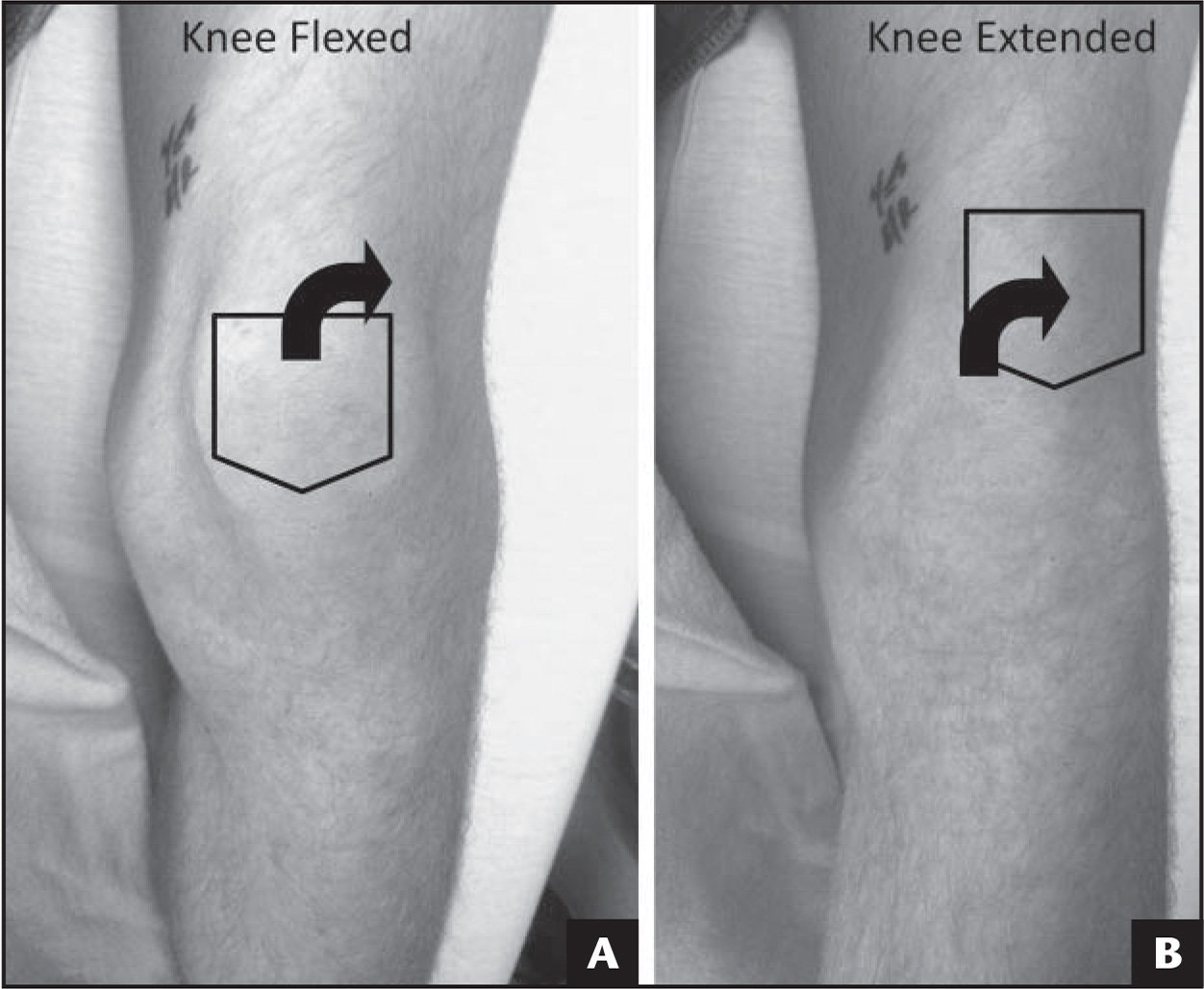
Patella instability is a common problem we treat in my practice. The stability of the patella can be assessed with multiple physical exam tests performed in the office. The J sign is a physical exam observation that correlates with poor patellar tracking. The patella takes an inverted J shaped path as flexion is initiated from a fully extended position. It represents the engagement of the patella within the femoral trochlear groove as the knee flexes. There is a high association of the sign with a condition called Patella Alta (Patella Alta describes the condition in which a patient has an abnormally long patellar tendon). Evaluation of this sign in conjunction with lateral patellar hyper-mobility testing and Q angle assessment are important tools for assessing overall patella stability and tracking.
To learn more about patellar instability: Knee Patella Instability- Relevant Anatomy and Function
Sources:
https://www.healio.com/orthopedics/journals/atshc/2014-11-6-6/%7B9ac1d823-b093-49d6-a202-7717f14e852e%7D/clinical-j-sign-in-the-evaluation-of-patellofemoral-pai
https://medisavvy.com/j-sign/