Anterior cruciate ligament (ACL) reconstruction is one of the most common operations I perform. Every patient has unique concerns, but over the years these five questions come up in almost every consult. Here’s how I answer them.
When will I be able to play sports again?
Clearance for sport is typically 6 – 9 months after surgery — and rehab is harder than the operation.
Returning to sport requires ligament healing, muscle strengthening, and re-establishing neuromuscular coordination. Rehabilitation after ACL reconstruction is long, grueling, and often harder than the actual surgery itself. Clearance for sports participation can be expected about 6 – 9 months after surgery. Improvement in knee function continues for up to a year, with increased sports participation throughout.
The studies show 82 – 95% of patients return to some level of sport; about 63% return to their pre-injury level of participation. Fear of re-injury is the most common reason cited for a reduction in or cessation of sport. Approximately 85 – 90% of patients achieve normal or nearly-normal knee function when assessed using objective outcome instruments such as the International Knee Documentation Committee (IKDC) knee evaluation form.
Will I have to wear a brace after surgery?
No. Modern studies show post-op functional bracing does not reduce ACL re-tear rate.
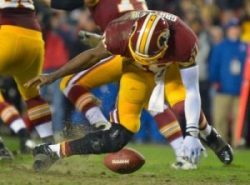
No. Historically many surgeons prescribed functional braces after ACL surgery. Recent studies have clearly established that a brace does not reduce ACL re-tear rate. Some patients feel a greater sense of security wearing one, but it’s not necessary.
Custom ACL functional braces fitted to your leg can be expensive (upwards of $1,000). If you gain or lose muscle mass they must be re-fit. Wearing the brace can be cumbersome, and patients who do get them often report eventually growing tired of wearing them. Athletes in sports that demand agility and speed dislike the restriction in motion.
Put simply: if an ACL brace effective enough to prevent ACL injury existed, every athlete at the professional level would be wearing one.
What kind of graft should I use for my reconstruction?
My preference is autograft. Allograft re-tear rate runs ~23% vs ~5% for autograft.
ACL reconstruction can be performed with a variety of tissue sources, or grafts. The best choice for you is individual, but certain attributes make certain grafts better suited to certain patients. There are two broad categories: grafts derived from your own body (autografts) and grafts derived from a cadaver (allografts).
Historically allografts were more commonly used. Recently, large studies have shown a higher rate of ACL re-tear (~23%) with allograft tissue versus autograft (~5%). The most common allografts available are patellar tendon, hamstring tendons, and Achilles tendon. Allografts spare the patient the discomfort of a graft harvest and allow for smaller incisions. The risk of disease transmission, while minimal (HIV < 1:1,000,000), is real, and depending on the tissue preparation technique the structural integrity of the graft may be harmed during processing.
My preferred graft source is autograft. The two most commonly used autograft sources are the patellar tendon and the hamstring tendons. Some surgeons strongly prefer patellar tendon graft, others strongly prefer hamstring. There is some evidence suggesting patellar tendon has a slightly lower failure rate than hamstring, but the difference is small. Patellar tendon graft is often harvested with bone on its ends — better and faster healing inside the bone tunnels, at the cost of potential anterior knee pain (problematic for masonry, construction, and other kneeling occupations). Hamstring autograft avoids that issue and is often the better choice in petite patients with restrictively small patellar tendons.
Learn more about ACL reconstruction surgery and the graft types available in their dedicated articles.
How much pain will I have after surgery?
Multi-modal pain control + a pre-op motion program keeps post-op pain very manageable.
Pain is a subjective experience that varies dramatically from person to person. However, as a semi-elective procedure, we can plan for the pain after ACL surgery — and using multiple modern modalities, the experience is far more manageable than most patients expect.
Before the surgery is even scheduled, there’s an emphasis on controlling swelling and restoring motion in the injured knee. Letting the knee and surrounding soft tissues recover from the initial trauma of the injury makes it easier to endure the surgical insult that follows.
On the day of surgery we pre-medicate and use an analgesic nerve block to reduce the sensitivity of sensory nerves and pain receptors before we even make an incision. The anesthesia team uses catheters that continuously infuse numbing medication around the major nerves in the operative leg. After surgery we provide strong anti-inflammatory and pain medication tuned to your sensitivity to those drugs to optimize dosing.
We cannot eliminate all the pain associated with surgery, but with this proactive approach patients consistently report a more pleasant experience than they were expecting.
When can I go back to work?
Desk/school work: ~1 week. Physically demanding jobs: case-by-case, often weeks.
It depends largely on the demands of your particular job.
The first 48 hours after surgery, minimize activity. Because of the effects of anesthesia on the body it’s normal to feel exhausted and weak. Pain control often requires narcotic pain medication for the first 1 – 2 weeks, which can cause drowsiness and impaired judgment. Once your pain is controlled and you no longer need narcotics consistently during the day, you’ll be safe to resume sedentary desk work or attend classes.
Some patients telework as early as 3 – 4 days after surgery, but that’s the exception rather than the norm. For students we recommend at least 4 – 6 days off school. For working adults we recommend 7 – 10 days off work. If you have a physically demanding job, return-to-work is determined case-by-case based on the specific demands. If your employer does not offer a light-duty alternative, you may need to apply for short-term disability.
These are the five questions I hear most often, but every case is different. The fastest way to get answers specific to your knee, your imaging, and your goals is a face-to-face consult.
Sources