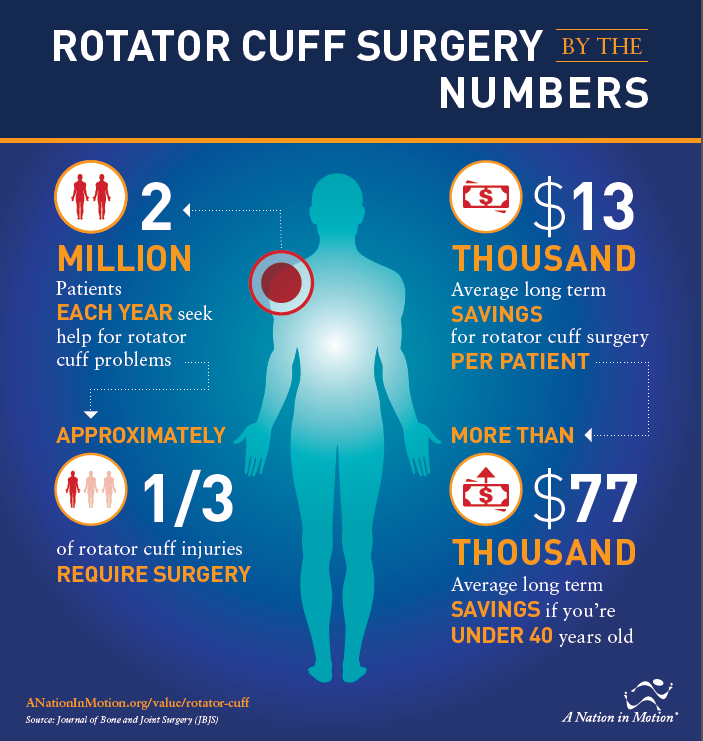
Rotator cuff tears are one of the most common shoulder injuries. More than 2 million patients seek help for rotator cuff injuries every year. The good news is a majority of rotator cuff tears DO NOT need surgery. A good orthopedic surgeon will recommend appropriate nonoperative treatment for rotator cuff injuries, and understands when to recommend surgery for rotator cuff tears. Below is the evidence based approach I take to treating rotator cuff tears.
This article walks through the whole picture — what the rotator cuff is, how tears happen, the symptoms, and the full range of treatment from physical therapy to arthroscopic repair. If your question is narrower — does my tear actually need surgery? — jump to the section below on what the randomized-trial evidence actually says about that decision.
What is the rotator cuff?
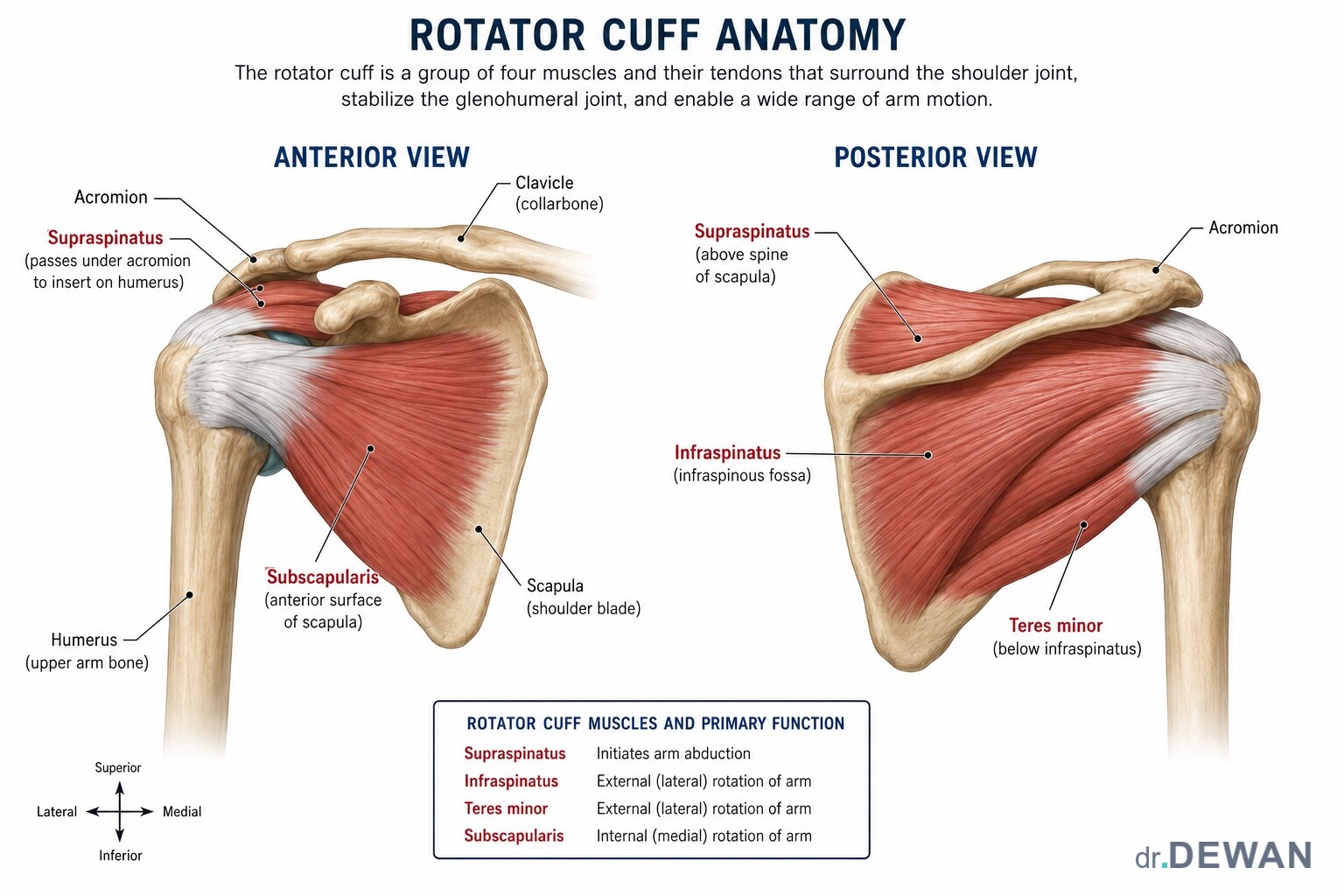
The rotator cuff are a group of muscles that help move the shoulder around in space. These muscles work in conjunction with many other muscles around the shoulder blade to help produce shoulder movement. A lubricating sac called the bursa is sandwiched between the rotator cuff and the bone on top of your shoulder (acromion). A healthy bursa facilitates smooth gliding of rotator cuff tendons when the arm is moved. For effective shoulder functioning, ideally, all 4 rotator cuff muscles work together in synchronization. If any one of the four muscles are not working optimally, other surrounding muscles must work in overdrive to make up for the lack of function.
I often compare the 4 rotator cuff muscles to the 4 engines on an airplane. For the airplane to fly well all 4 engines must be working. If one engine breaks down, the plane may still fly, but it puts increased stress on the other 3 engines. If 2 engines breakdown, depending on which 2 fail, the plane may not be able to fly at all!
When treating rotator cuff problems, the question becomes- Does the engine just need a tuneup? Does the engine need a jump start? Or does the engine need a complete repair?
How do you diagnose rotator cuff tears?
The evaluation for a rotator cuff injury begins with a thorough history of the symptoms. Rotator cuff injuries can occur after an acute trauma involving the shoulder or slow and progressively over time. Distinguishing between acute and chronic rotator cuff injuries is important for guiding treatment. The most common complaints with rotator cuff injuries include pain when reaching overhead, pain when reaching for an object out in front of the body, pain when reaching behind their back, and/or pain when laying on their shoulder at night. Pain with radiation to the elbow or the neck is common since muscles around the shoulder are overworked compensating for rotator cuff dysfunction. If shoulder pain radiates past the elbow it could suggest problems with nerves around the shoulder. Shoulder symptoms can be produced by irritation of the nerves as they exit the spine in the neck region. Distinguishing features of shoulder pain originating from nerve irritation at the neck include accompanying signs of numbness, tingling, or hand weakness on the side with shoulder pain.
A focused physical exam of the shoulder is performed next. Physical exam maneuvers to test individual rotator cuff muscles are used. Certain provocative tests evaluate for areas of inflammation in the shoulder. As a part of the work up, X-rays are obtained next to establish if there are any predisposing anatomical risk factors such as a bone spur or shoulder malalignment that correlate with rotator cuff injury. If there is a high suspicion of neck problems cervical spine X-rays may also be obtained. This is often all the information needed to arrive at a diagnosis. MRI is only necessary when a chronic rotator cuff injury has not responded to standard non-operative treatment (described below) or if acute rotator cuff tears from trauma are suspected.
Chronic degenerative rotator cuff tears
Chronic and degenerative rotator cuff tears are secondary to cumulative wear and tear of the rotator cuff muscles and generally begins to affect people after the age of 45. The rotator cuff tendons pass below a bony area (the acromnion) before they attach to the upper part of the arm bone. Rotator cuff tendonitis, or impingement syndrome, describes the inflammation and fraying of the tendons over time with shoulder movement. Symptoms from rotator cuff tendonitis usually begin insidiously and can progress over time, to the point where even activities of daily living like brushing ones teeth or combing hair can be difficult. Common causes of rotator cuff tendinitis include:
- Occupations such as hairstyling or painting overhead that require maintaining the arm elevated at the shoulder for prolonged period of times
- Playing overhead sports that involve repetitive stressful shoulder movements such as tennis, baseball, volleybally, swimming, or overhead weight lifting
- Poor coordination of the shoulder blade and shoulder muscles including poor posture
Rotator cuff injury represents a continuum of pathology. Early rotator cuff injury may only involve irritation in a part of the tendon experienced as pain during very specific movements. With time this inflammation may affect the neighboring lubricating sac called the bursa (see diagram above) sandwiched between the rotator cuff and the bone on top of your shoulder (acromion). When the rotator cuff tendons are injured and the bursa becomes involved it is called a bursitis and aggravates shoulder dysfunction. Prolonged chronic rotator cuff irritation can lead to muscle attrition and progress eventually to rotator cuff tears. Tears that only involve a part of the muscle’s tendon are considered partial tears. When the entire tendon detaches from the bone, the tear is considered complete. As the injury increases in severity, compensation from neck or shoulder blade muscles can generate referred pain.
Treatment of all chronic rotator cuff tears begin with non-operative management. This includes activity modification, physical therapy, anti-inflammatories, and an adjunct steroid injection in the right circumstances.
Activity Modification. Overhead activities place greater demand on the rotator cuff muscles than others. Occupational activities such as painting overhead or carpentry that require repetitive hoisting and elevation of the shoulders are stressful for shoulders with rotator cuff tendinitis. Finding ways to minimize these overhead motions are one strategy for coping with rotator cuff tendinitis. This may be as simple as incorporating a brush extension for painting overhead, or using ladders or stools when appropriate. Certain sports can be more taxing on the shoulders. Activities such as tennis or volleyball have several repetitive overhead motions that can aggravate rotator cuff tendinitis. ears
Physical Therapy. The rationale for physical therapy is often questioned by patients, especially in those that are active and fit. It is important to remember that there are several muscles that help with shoulder movement. Most shoulder exercises recruit a number of muscles that compensate for a weaker rotator cuff muscle. Consequently, strong supporting muscles get stronger, and the weak injured rotator cuff muscle often remains neglected getting weaker. In a focused physical therapy rehabilitation program, emphasis is placed on the weakest link, and exercises are tailored to isolate the involved rotator cuff muscle. Returning to the analogy of airplane engines discussed above, when one engine (i.e. one rotator cuff muscle) is compromised, the other engines have to work in overdrive to keep the plane flying. Physical therapy is equivalent to getting a jump start and tune up for the dysfunctional engine. While it may seem counter-intuitive to many, the prescribed therapy involves very low weight and rather an emphasis on form to isolate certain muscles in the shoulder. Generally 4 weeks of therapy across 8 sessions are necessary to begin seeing results. The importance of therapy cannot be stressed enough. Even though it can be time consuming and an inconvenience with a busy work-life schedule, failing to “tune-up the engine” is going to precipitate more problems over time. Much like a car with neglected maintenance, what may start as a minor problem, can progress to a critical problem in the future if ignored.
Anti-inflammatories. This class of drugs (referred to as non-steroidal anti-inflammatory drugs or NSAIDs), can help manage the symptoms from a degenerative rotator cuff injury. While the analgesic affect of these drugs maybe immediate, I often counsel patients they need to take it for a sustained period (2-3 weeks) to realize the anti-inflammatory benefits. As long as there are no health concerns such as drug allergy, kidney problems, or drug interactions, I recommend patients try a course of Meloxicam, Ibuprofen, or Naproxen to see if it helps manage their symptoms.
Steroid injections. If the pain and shoulder dysfunction has progressed to the point that oral medications are inadequate and therapy participation is limited by pain, a steroid injection into the space above the rotator cuff muscles into the bursae may be very helpful. A steroid injection is one way to “put the fire out” and help stem some of the inflammation. It is important to understand however that this is only a short term solution, and must be combined with physical therapy to prevent weak rotator cuff muscles from falling into a cycle of inflammation and irritation.
Non-operative treatment is the mainstay for chronic degenerative rotator cuff injuries. Even in the setting of full-thickness complete chronic rotator cuff tears, greater than 85% of patients undergoing non-operative rehabilitation treatment experience a lasting improvement and benefit and do not need surgery. If all the measures above fail, in refractory cases with persistent unbearable pain, I obtain an MRI to characterize the extent of the rotator cuff injury, and then accordingly, if a tear is identified, offer arthroscopic rotator cuff surgery. Arthroscopic shoulder surgery is discussed in detail further below.
Acute traumatic rotator cuff tears
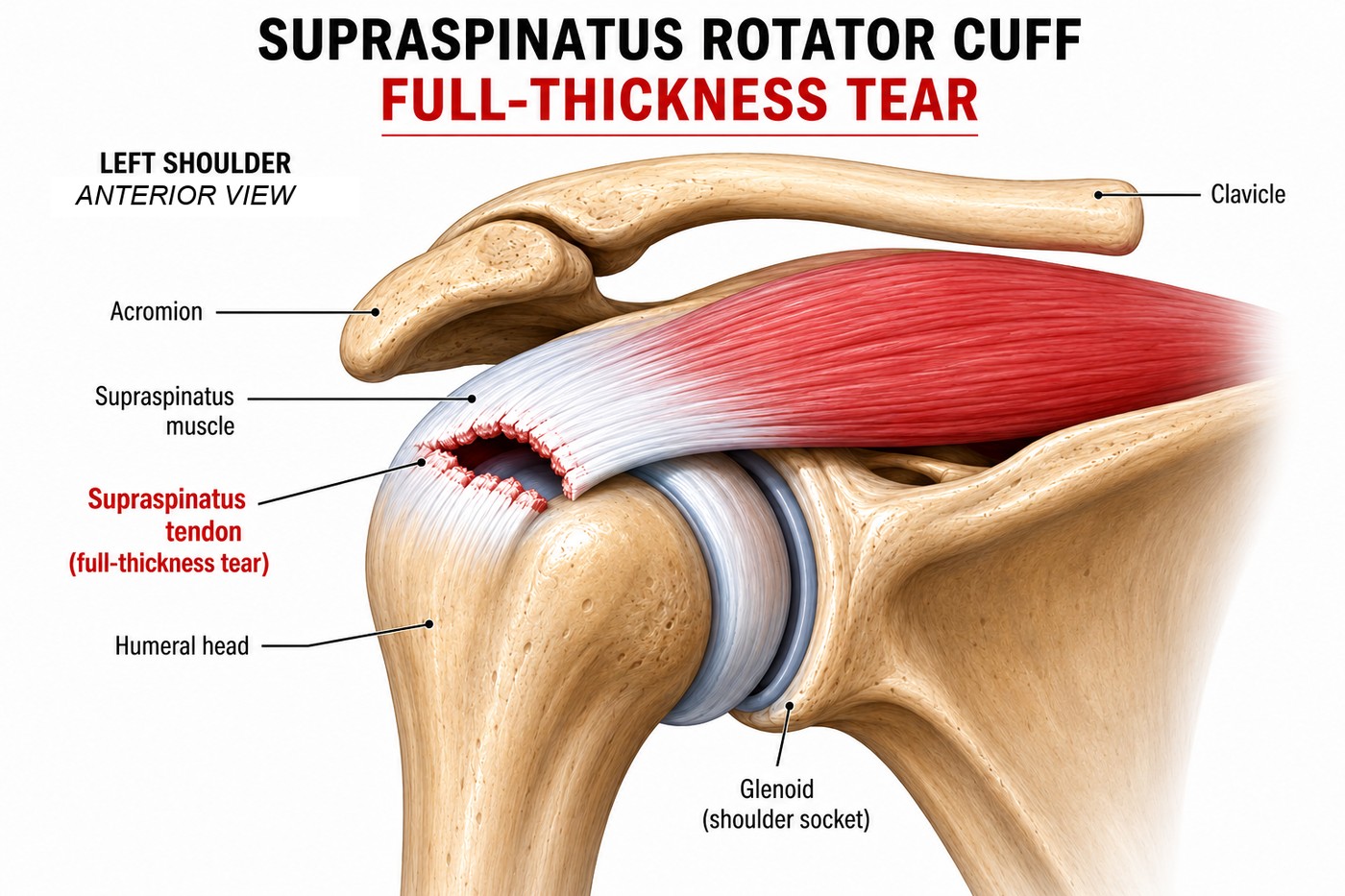
Acute traumatic tears are usually the result of a significant force transmitted across the arm. Some common scenarios include falls onto an outstretched arm or falls from a bike directly onto the shoulder. Unlike chronic tears that usually result from deteriorating muscle tendon tissue, an acute tear involves healthy rotator cuff tendons that are avulsed from the bone. The clinical presentation of these injuries is more dramatic with sudden inability to raise the arm. When an acute rotator cuff tear is suspected, MRI is not delayed. Once the extent of the injury has been characterized, any complete tears involving retraction of the torn avulsed tendon can benefit from arthroscopic rotator cuff repair. Surgery generally should be performed in this setting sooner rather than later before muscle atrophy begins to develop.
Do I Really Need Surgery? What the Evidence Actually Says
“You have a rotator cuff tear.” For a lot of people, those words land like a surgical sentence — a tear is torn, torn things need fixing, so book the operating room. It is one of the most common conversations I have in clinic, and the starting point is almost always the same: the MRI report rarely decides it by itself. A torn rotator cuff is extraordinarily common, especially past middle age, and a large share of the people walking around with one have no idea it's there.
So the real question isn't “is it torn?” It's “is this tear the kind that does better with surgery, or the kind that does just as well with a good rehab program?” The evidence on that question is unusually rich — and unusually split. Two of the best randomized trials we have point in opposite directions, and the American Academy of Orthopaedic Surgeons (AAOS) published an updated clinical practice guideline in August 2025 that, read carefully, refuses to declare a single winner.1 One note before the trials: the chronic-versus-acute distinction made earlier in this article matters here, because the trials below studied degenerative tears almost exclusively. That's the population where the surgery-versus-rehab debate is genuinely live. For a young patient with an acute traumatic tear, the calculus is different — and I'll come back to that.
The two trials that disagree
If you only read one summary of the rotator cuff literature, you'd walk away confused, because two excellent randomized trials reached opposite headlines. Both are worth understanding, because the disagreement isn't sloppiness — it's the two trials studying different shoulders.
Moosmayer: at 10 and 15 years, repair pulled ahead
A Norwegian team led by Stefan Moosmayer randomized 103 patients with small-to-medium tears (no larger than 3 cm) to either primary tendon repair or a structured physiotherapy program, with the option to cross over to surgery later if therapy failed. They then followed these patients for a decade and a half — one of the longest randomized follow-ups in all of shoulder surgery.
At 10 years, the surgical group was doing measurably better: about 9.6 points higher on the Constant score (a 0–100 shoulder rating), roughly 16 points better on the ASES score, and about 1.8 cm less pain on a 10 cm pain scale.2 At 15 years the gap hadn't closed — it had widened slightly, to about 11.8 Constant points in favor of repair.3 Two details stand out. First, in the patients who were managed with therapy and never repaired, the average tear grew from about 16 mm to about 32 mm over the study — it roughly doubled. Second, the 14 patients who started with therapy and later crossed over to surgery ended up about 10 Constant points worse than those repaired up front. The authors' takeaway: for this specific tear, repairing it early beat waiting.
Kukkonen: for small tears in older shoulders, no difference
A Finnish team led by Juha Kukkonen ran a different randomized trial — 180 shoulders, all with small, non-traumatic supraspinatus tears (one tendon), all in patients older than 55. They compared physiotherapy alone against two surgical options. At the 1-, 2-, and now 5-plus-year marks, the groups landed in essentially the same place: no statistically significant advantage for surgery, and — notably — operating did not protect the joint from degenerating over time.4 For the older patient with a small single-tendon tear and no injury, this trial says a good rehab program is a legitimate destination, not just a stop on the way to the OR.
Why they disagree — and why that's useful
Put the two side by side and the “contradiction” mostly dissolves. Moosmayer studied a slightly younger group (down to the 50s) with tears up to 3 cm and found repair wins over 10–15 years. Kukkonen studied older patients (all over 55) with only small single-tendon tears and found a tie at 5 years. The lesson isn't “surgery works” or “surgery doesn't.” It's that the answer slides with age, tear size, and how much time you're measuring over. Younger shoulder, bigger tear, longer horizon → the scale tips toward repair. Older shoulder, small tear, pain relief as the goal → the scale tips toward a serious trial of rehab first.
What happens if I just wait?
This is the question therapy-first patients most deserve a straight answer to, because “let's try rehab” is only fair if we also watch what the tear is doing. The best natural-history data we have comes from a prospective study by Keener and colleagues that tracked degenerative cuff tears over years.5 Two findings matter for your decision. First, tears tend to enlarge over time, and the risk is higher for full-thickness tears than for partial ones. Second — and this is the part that should shape the plan — tear enlargement was linked to the muscle degenerating and to previously painless shoulders becoming painful. In other words, waiting isn't free: a tear can quietly get bigger and the muscle behind it can quietly go to fat.
That last point connects to a classic piece of shoulder science: the Goutallier grade, a 0–4 scale for how much fat has replaced the muscle behind the tendon.6 Once fatty infiltration is advanced (grade 3–4), a repair is far less likely to heal and hold, and that change is largely a one-way street — it doesn't reverse after surgery. So part of “can I wait?” is really “can I wait without letting the tear cross from repairable into not-worth-repairing?” For most small, stable tears the answer is comfortably yes. For a larger tear in a younger, active person, the clock is more real.
What the 2025 AAOS guideline actually says
The updated AAOS guideline is refreshingly honest about the split. For symptomatic small-to-medium full-thickness tears, it gives a strong recommendation that either surgery or physical therapy meaningfully improves patient-reported outcomes — both are legitimate first moves.1 It notes, at moderate strength, that when a repair actually heals, those patients tend to do better than with therapy alone. And it flags the caveat that sits underneath the whole debate: with therapy alone, tear size, muscle atrophy, and fatty infiltration can progress over five to ten years. It does not tell you that everyone needs surgery, and it does not tell you that surgery is pointless. It tells you the decision is yours to make with a surgeon who knows your specific shoulder.
What I weigh in clinic
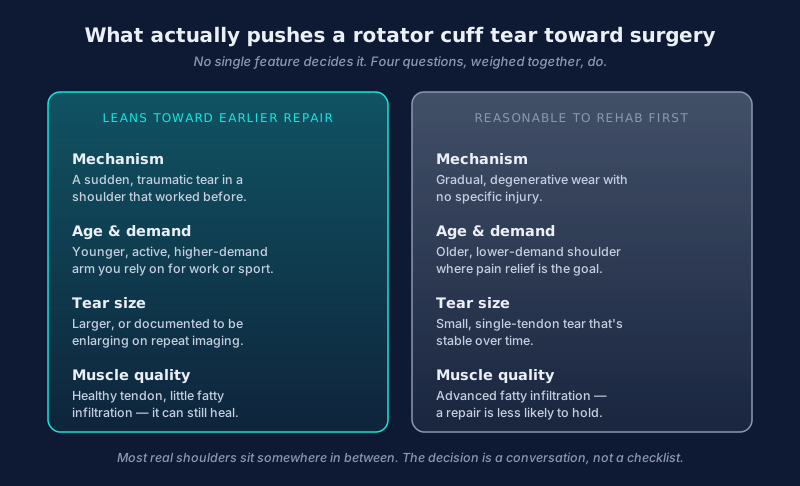
When a patient hands me an MRI report that says “rotator cuff tear,” I'm running through a sequence out loud with them. Here's the actual reasoning.
1. Did this happen in a moment, or over years?
A genuine traumatic tear in a shoulder that worked fine the week before moves me toward earlier repair — the tendon is usually healthy enough to heal, and repairing it promptly protects the muscle before it can degenerate. A gradual, degenerative ache buys us room to try rehab first.
2. How old is the shoulder, and what do you need it to do?
A 52-year-old electrician who works overhead all day and a 74-year-old who wants to sleep and lift a coffee cup are not the same decision, even with an identical MRI. The Kukkonen trial speaks directly to the older, lower-demand shoulder; the Moosmayer trial speaks more to the younger, higher-demand one. I try to match your shoulder to the trial that actually studied it.
3. How big is the tear, and is it changing?
Small, single-tendon, stable tears are the ones where rehab holds up well in the data. For a bigger tear, or one we can see enlarging on repeat imaging, I'm more inclined to repair before it moves out of the repairable zone.
4. What does the muscle look like?
If the muscle behind the tendon is still healthy, a repair has a real chance of healing. If it's already largely fat (advanced Goutallier grade), a standard repair is much less likely to hold, and we talk plainly about whether the goal should be pain relief and function through other means rather than chasing a repair that the biology won't support.
5. Have we given rehab a real, supervised trial?
“I tried some exercises” and “I did twelve weeks of a structured, progressive, supervised program” are different things, and only the second one counts as a fair test. For the degenerative tears where rehab is a reasonable first move, that's usually where we start — and if you're not turning the corner, the conversation about surgery is then an informed one rather than a reflex.
None of this is a formula. Two of those five answers can point one way and three the other, and the recommendation lives in the weighing. What I try never to do is let a single line on a radiology report — “full-thickness tear” — make the decision that a full picture of your shoulder should make.
Arthroscopic rotator cuff repair
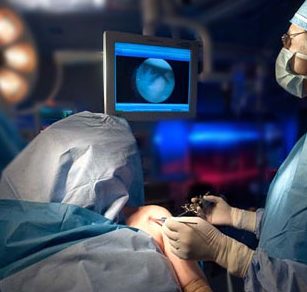 Arthroscopic surgery of the shoulder is commonly performed in the United States. The procedure involves inserting a camera about the size of a pen into the shoulder joint. From another incision, I insert specialized arthroscopic tools to manipulate structures inside the shoulder. In older patients, with chronic degenerative rotator cuff injury, as described above, surgery is the last resort. In contrast, for patients with acute traumatic rotator cuff tears, arthroscopic surgery is considered immediately.
During arthroscopic surgery the torn tendon is identified, and cleaned of any debris. The tendon is then pulled back to where it anatomically connects with the shoulder bone. Using specialized implants that resemble sheet rock anchors with attached sutures, the tendon is sutured back onto the bone. It is notuncommon to use 1-3 anchors to securely reattach the tendon to the bone. If preoperative imaging identified any factors predisposing rotator cuff injury such as a bone spur, these can also be addressed at the time of rotator cuff repair.
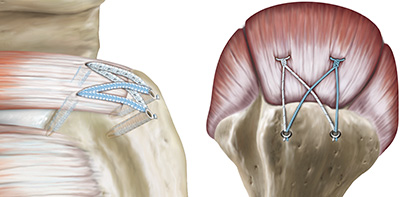
For the appropriately selected patient, arthroscopic rotator cuff repair can provide significant reduction in pain and improvement in shoulder function/strength. Recovery from a rotator cuff repair can be challenging. Initially the involved arm has to be immobilized for 6 weeks in a bulky and cumbersome shoulder brace while the muscles heal in their new position. This can significantly impact your independence and ability to function after surgery. After the period of immobilization, 3-4 months of physical therapy is necessary to reduce the shoulder stiffness and re-strengthen the rotator cuff muscles that have not been used since surgery. That is, the “engines” need a jump start to get going again. Depending on the extent of the injury, recovery continues for anywhere from six months to a year after surgery. Overall, after recovery is complete , the outcomes are good-excellent.
The bottom line for the layperson
- A rotator cuff tear on MRI is common and does not automatically mean you need surgery — plenty of people have one and never need an operation.
- The kind of tear matters most: a sudden, traumatic tear in a younger, active shoulder leans toward earlier repair; a gradual, degenerative tear in an older shoulder is often reasonable to rehab first.
- The best long-term trial (15 years) found repair pulled ahead for tears up to 3 cm — while a separate trial found no difference for small tears in patients over 55. Both are right, for different shoulders.
- Waiting isn't free: tears can enlarge and the muscle can turn to fat, and past a point a repair may no longer hold — so if you wait, the tear should be watched, not ignored.
- The 2025 AAOS guideline says surgery and physical therapy are both legitimate starting points for most small-to-medium tears. The right choice depends on your age, your tear, your muscle quality, and what you need your shoulder to do — decide it with a surgeon, not from the MRI report alone.
If you've been told you have a rotator cuff tear and you're not sure whether it needs fixing, that uncertainty is reasonable — the evidence itself is split, and the answer really does depend on the specifics of your shoulder. Learn more about the arthroscopic shoulder surgery I perform in Sugar Land, see what the recovery looks like in our piece on sleep after rotator cuff surgery, or request a visit — or call 281-690-4678 — to review your imaging together.
Sources
- American Academy of Orthopaedic Surgeons. “Management of Rotator Cuff Injuries: Evidence-Based Clinical Practice Guideline.” Adopted August 2025. AAOS CPG (PDF)
- Moosmayer S, Lund G, Seljom US, et al. “At a 10-Year Follow-up, Tendon Repair Is Superior to Physiotherapy in the Treatment of Small and Medium-Sized Rotator Cuff Tears.” J Bone Joint Surg Am. 2019;101(12):1050–1060. DOI: 10.2106/JBJS.18.01373
- Moosmayer S, Lund G, Seljom US, et al. “Fifteen-Year Results of a Comparative Analysis of Tendon Repair Versus Physiotherapy for Small-to-Medium-Sized Rotator Cuff Tears.” J Bone Joint Surg Am. 2024;106(19):1785–1796. DOI: 10.2106/JBJS.24.00065
- Kukkonen J, Ryösä A, Joukainen A, et al. “Operative versus conservative treatment of small, nontraumatic supraspinatus tears in patients older than 55 years: over 5-year follow-up of a randomized controlled trial.” J Shoulder Elbow Surg. 2021;30(11):2455–2464. DOI: 10.1016/j.jse.2021.03.133
- Keener JD, Galatz LM, Teefey SA, et al. “A Prospective Evaluation of Survivorship of Asymptomatic Degenerative Rotator Cuff Tears.” J Bone Joint Surg Am. 2015;97(2):89–98. DOI: 10.2106/JBJS.N.00099
- Goutallier D, Postel JM, Bernageau J, et al. “Fatty muscle degeneration in cuff ruptures. Pre- and postoperative evaluation by CT scan.” Clin Orthop Relat Res. 1994;(304):78–83. PMID: 8020238
- Additional reading: PubMed 23540577 · AAOS OrthoInfo: Rotator Cuff Tears · AAOS OrthoGuidelines
This article reflects Dr. Dewan's reading of the cited evidence at the time of publication. It is educational content, not medical advice. Your specific case may differ — schedule a consultation to discuss your imaging and history.