
Preparing for surgery is a frightening process. As a surgeon, I consider it a privilege when a patient entrusts me with their health and safety. Developing rapport is essential for a successful surgical outcome.
Once you’ve found your surgeon (see 9 ways to find the best orthopedic surgeon near you), consider asking the seven questions below. They are the most difficult and uncomfortable questions patients have asked me over the years — and the ones I think every patient should ask.
Do you double-book surgeries?
Concurrent surgery is acceptable only if your surgeon does every critical portion of your case.
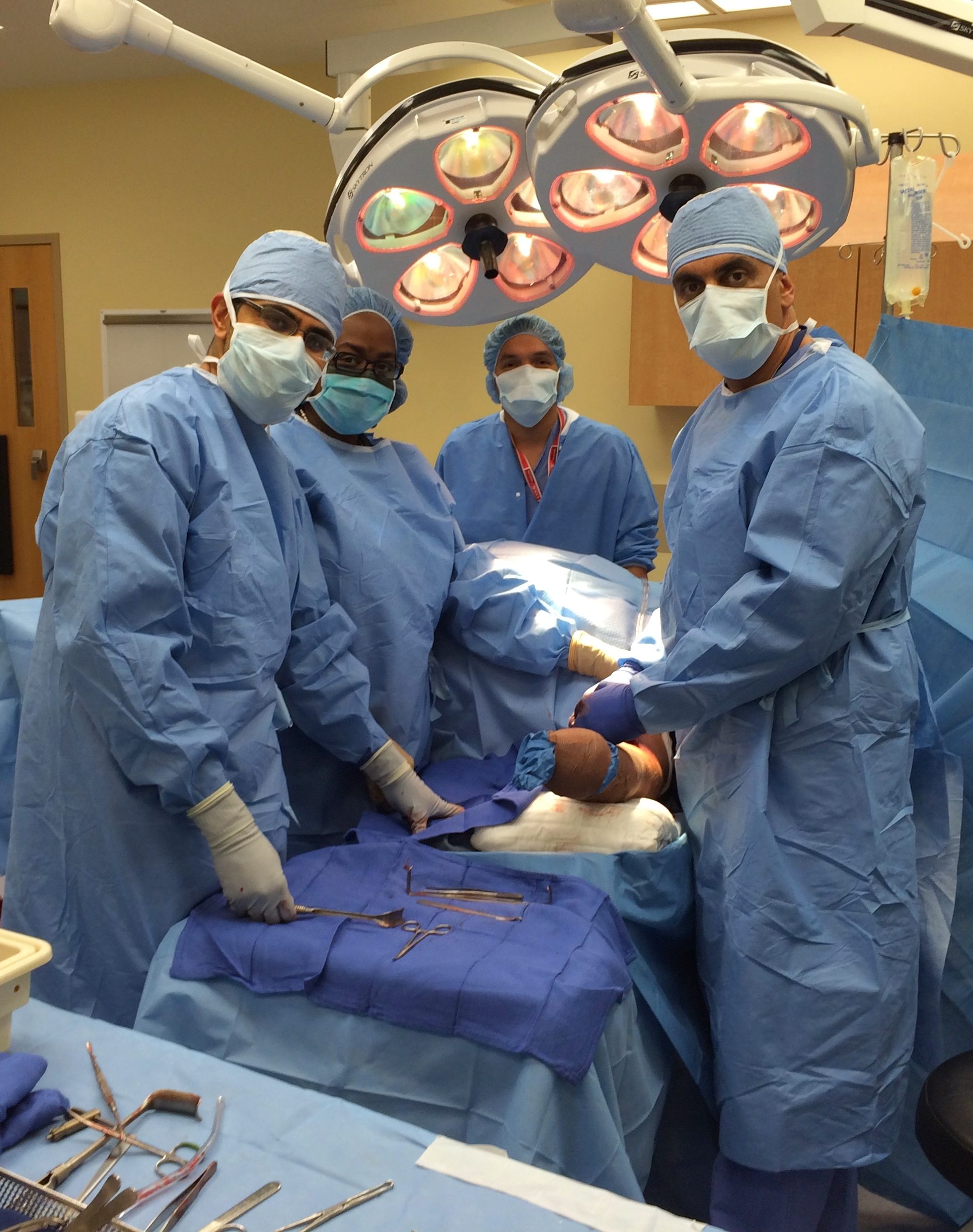
Some surgeons book multiple surgeries simultaneously. The practice came under public scrutiny after a Boston Globe investigation exposed Massachusetts General Hospital’s policies permitting double- and triple-booking. It highlights a little-known practice abused by unscrupulous surgeons.
If your surgeon has a fellow, resident, or experienced physician assistant under supervision, they may complete the “critical portions” of a case and defer less critical components (such as wound closure) to an assistant. In the medical community this is considered acceptable, assuming the surgeon is indeed completing the critical portions. Where it’s ripe for abuse is how a surgeon may define “critical portion.”
When I was a chief resident, my attending was always present and supervising the critical portions of every case. Cases were staggered so that while I was closing one wound, the next case was starting under my attending’s direction in the neighboring OR — critical portions of two cases never overlapped, and the attending was always a few feet away. Executed properly, this is efficient. Executed lazily — an attending who passes through the OR for a cursory glance and ceremonial hand wave — it is fraud.
Ask: “What part of the case do you delegate to your trainees or assistants?” You may not get a perfectly straight answer, but the way your surgeon reacts to the question often tells you how the conflict is managed. Note: don’t let any of this dissuade you from academic centers — studies have found no difference in surgical outcomes between academic and non-academic settings.
Will you see me post-operatively?
Some surgeons delegate all post-op visits to a PA. A blended model is fine; expect to see the surgeon for problems.
This may seem benign, but it surprises folks to learn that some surgeons delegate this responsibility entirely to their physician assistant or trainees. Many people don’t realize surgeons are not reimbursed per visit in the 90-day global period after surgery — they receive an upfront lump sum that encompasses operative time and initial post-op care.
For some unscrupulous surgeons, it’s more revenue-efficient to spend their time on new consults and let the PA do post-op. There’s nothing wrong with that model in principle — most post-op care is fairly algorithmic. But if your expectation is to see the surgeon, it can come as a disappointment.
A well-balanced approach is a few post-op visits with the surgeon, some with the assistant. Good PAs recognize when recovery is deviating from normal and escalate quickly. Don’t hesitate to request your surgeon’s evaluation if things aren’t progressing as outlined preoperatively.
What bills will I get after surgery?
The surgeon’s fee is one of 4 – 5 separate bills. Get the full picture before you schedule.
Organizing a surgery involves multiple parties and specially-trained professionals. The surgeon’s bill is only one component. You may receive separate bills for the surgical facility, anesthesia, implants, and durable medical equipment.
While your surgeon’s fees may be covered by your insurance, finding out after the fact that the surgical facility or anesthesiologist is out-of-network can be a nasty surprise.
In my practice we make it a point to give patients a ballpark estimate of out-of-pocket cost, the portion covered by insurance, and a summary of the different bills to anticipate. As deductibles climb higher, the costs associated with elective surgery require planning. If there are financial constraints, the plan can be discussed and tailored — for example, instead of an expensive cryotherapy cuff, I might suggest the patient forgo it and use tried-and-true cold compresses. Compromises like that can make a previously untenable surgery a more palatable proposition.
How often do you do this surgery?
Volume matters. The auto-transmission shop shouldn’t do their first body-work job on your car.
I’m not sure why so many patients are afraid to ask this. Almost always they begin with “please don’t get offended.” The question is completely appropriate — you wouldn’t want the auto-transmission specialist to make their first foray into body work on your car. I want the confidence that my surgeon has done this surgery many times and knows exactly what they’re getting into.
Caveat: some diagnoses are more common than others. If your condition is rare, don’t be alarmed if your surgeon only does one or two of those cases a year. See 9 ways to find the best orthopedic surgeon for the online tools that let you independently verify operative experience.
What is your success rate with this surgery?
Any surgeon who guarantees 100% is being less than honest. Ask what complication they fear most.
This is a loaded question with two purposes — to get a realistic idea of what surgery can accomplish, and to gauge how the surgeon handles the question.
Every surgeon gets complications. There’s an old adage: “if you aren’t having complications, you aren’t operating.” Every surgeon, despite their best efforts, will encounter complications. It’s what keeps me up at night.
If someone guarantees 100% success — hook, line, and sinker — that is a red flag. Some surgeries have 99% success rates and exceedingly low complication rates. But for a surgeon to guarantee success is, in my opinion, dishonest.
Good surgeons put in place many practices that minimize risk. Pay attention to the surgeon’s attention to detail, level of organization, and the overall coordination of the surgical process. Don’t be afraid to ask what safeguards are in place to prevent complications like infection or blood clots. The best question to ask is: “What complication do you fear most?”
Can I delay my surgery?
Most elective surgery can be delayed indefinitely. Pressure to schedule is a red flag.
Most elective surgeries can be delayed indefinitely. If a surgeon begins to pressure you to schedule or is insistent on getting you on the books, that is a red flag.
There are exceptions — some surgeries do benefit from doing them sooner rather than later. But the risk associated with delay should be articulated by the surgeon so you can make the informed decision.
I never want to pressure anyone into surgery. That only leads to regret if a complication arises. My patients are just as invested in undergoing surgery as I am, and the relationship has to start on a solid foundation. If there are any doubts, I encourage patients to discuss with family, do more research, seek a second opinion, and proceed only once they are comfortable with me as their surgeon.
Have you ever cancelled a surgery because you were mentally or physically unfit?
A surgeon who can recognize their limits is the surgeon you want operating on you.
This question can be hit-or-miss. Acknowledging one’s weaknesses is hard. Surgeons who have endured arduous hours of training, relentless nights of call, and mountains of stress may find it off-putting. But a surgeon who can put ego aside and put the patient first is self-aware — and that’s the surgeon I want operating on me.
The most common concern I hear from family is: “You get enough sleep, doc?” Realistically, minutes before anesthesia induction is too late to vet your surgeon’s self-awareness. Asking the question in advance generates a dialogue in clinic that may reveal how self-aware they really are.
I learned early in my practice that patients actually appreciate a surgeon who can recognize their limits. Once, after a long trauma call with back-to-back emergent surgeries, I realized my fatigue had approached a point that could compromise my ability to operate effectively. I deliberated, then approached the patient about rescheduling her long-awaited elective surgery. Much to my surprise, she was nothing but pleased that I proposed postponement.
This is far from a comprehensive list, but these are the questions that have made me pause and reflect over the years. If there are others you think belong here, I would love to hear them — feel free to bring them up in clinic.